

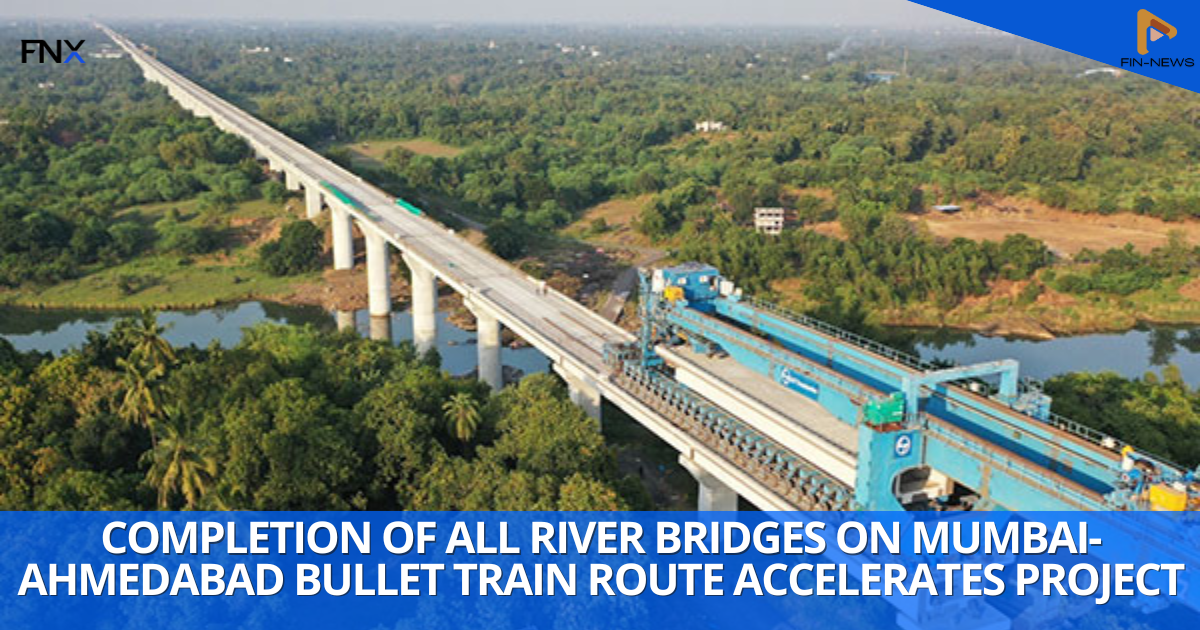
The ambitious Mumbai-Ahmedabad bullet train project, India's first venture into high-speed rail, has achieved a significant milestone with the completion of all nine river bridges on the route stretching from Vapi to Surat. This milestone marks an essential phase in advancing the 508-kilometer corridor, which aims to connect Mumbai and Ahmedabad with state-of-the-art, high-speed rail technology. The bullet train project is being spearheaded by the National High-Speed Rail Corporation Limited (NHSRCL), responsible for the construction and development of this transformative rail corridor.
The Mumbai-Ahmedabad High-Speed Rail (MAHSR) project, initiated in collaboration with the Japanese government, envisions reducing travel time significantly between these two economic hubs. Currently, travel between Mumbai and Ahmedabad can take upwards of six to seven hours by train, while the high-speed train is expected to cover the distance in just about two hours. This rapid transit system promises to enhance connectivity, support economic growth, and set a new benchmark for infrastructure projects in the region.
River Bridge Completions: A Major Engineering Achievement
The completion of the nine river bridges represents a remarkable engineering achievement, given the complex terrain and the technical challenges associated with constructing high-speed rail infrastructure. These bridges were constructed to meet stringent safety and durability standards, ensuring stability for the high-speed operations expected on this route. The rivers along this stretch include some of the significant waterways that posed unique challenges during the construction phase, which NHSRCL managed to address successfully.
The bridges required advanced engineering techniques and materials to withstand the operational demands of high-speed rail, especially given the unique topographical and hydrological characteristics of each river. Engineers and construction teams employed specialized technology to ensure that the foundations and structures could endure variable river flows, seasonal floods, and the dynamic stresses associated with high-speed trains.
Key Highlights of the Project’s Progress
The Mumbai-Ahmedabad corridor is one of the most closely-watched infrastructure projects in India due to its scale, impact, and reliance on cutting-edge technology. With an estimated completion timeline in the coming years, NHSRCL and its partners are making steady progress on multiple fronts, including land acquisition, civil construction, and equipment installation.
Land Acquisition: Over 90% of the required land has been successfully acquired along the route, including the designated station areas, bridge sites, and terminals. The successful acquisition is a key enabler for timely project progression, as it allows uninterrupted construction across various sections.
Civil Works: Construction on the primary terminal stations in Mumbai and Ahmedabad is well underway. These terminals are designed to accommodate the high-speed train facilities, including advanced ticketing, waiting areas, and transit management systems to support passenger convenience and efficiency.
Technical Partnerships and Funding: This project has drawn significant international interest, with Japan being a key partner in terms of funding, technical guidance, and high-speed rail technology. The Japan International Cooperation Agency (JICA) is providing the necessary financial support under concessional loan terms, while Japanese companies are engaged in technical roles to ensure the successful transfer of expertise.
Safety and Environmental Standards: The project adheres to strict safety protocols and environmental considerations, factoring in measures to mitigate environmental impacts, such as noise and vibration control, and incorporating advanced safety mechanisms that are standard in high-speed rail networks.
Impact of the Project on the Region’s Economy
The Mumbai-Ahmedabad bullet train project is expected to act as a catalyst for regional economic growth. Enhanced connectivity will reduce travel times and increase access to both cities’ job markets, educational institutions, and healthcare facilities. The economic benefits include job creation during both the construction and operational phases, with thousands of jobs generated across engineering, operations, and maintenance sectors.
Moreover, this project is poised to drive secondary economic activities, such as the development of real estate, retail, and hospitality sectors along the corridor. The improved connectivity may lead to the establishment of new residential, commercial, and industrial zones, fostering balanced economic growth between the two metropolitan regions. Analysts predict that the bullet train could boost property values, attract new investments, and encourage the migration of skilled workers and professionals into the region.
The Path Forward: Key Milestones and Expectations
Despite some initial delays due to land acquisition challenges and pandemic-related disruptions, the project has achieved significant momentum in recent months. The successful completion of the river bridges between Vapi and Surat signifies NHSRCL's ability to overcome engineering and logistical challenges, setting a positive precedent for the subsequent phases of the project.
The upcoming milestones include the installation of the train tracks, the initiation of signaling and communication systems, and the integration of rolling stock supplied under the technical collaboration with Japan. Testing and commissioning of the infrastructure will follow, ensuring that all systems are operational before passenger services begin.
In alignment with global high-speed rail standards, the Mumbai-Ahmedabad bullet train corridor will incorporate state-of-the-art technology to enhance safety, speed, and reliability. Some of these features include seismic monitoring systems to mitigate earthquake risks, automated train control systems, and high-precision braking mechanisms. These elements aim to ensure a seamless travel experience that prioritizes passenger safety and comfort.
Conclusion: A New Era for Indian Railways
The Mumbai-Ahmedabad bullet train project represents a paradigm shift in Indian transportation infrastructure, setting the stage for future high-speed rail networks across the country. By adopting advanced technology and engineering practices, India aims to establish a world-class high-speed rail system that meets international benchmarks. The successful completion of the river bridges is a testament to the progress achieved so far and underscores the commitment to overcoming challenges to deliver this transformative project.
As India steps into the realm of high-speed rail, the Mumbai-Ahmedabad bullet train corridor will not only bridge geographical distances but also bring people, economies, and ideas closer together. It reflects India’s ambition to redefine travel standards, positioning the country as a global player in high-speed rail transportation. With further developments, this landmark project is set to pave the way for a new era of mobility, growth, and connectivity across the Indian subcontinent.
Leave a comment
Your email address will not be published. Required fields are marked *