

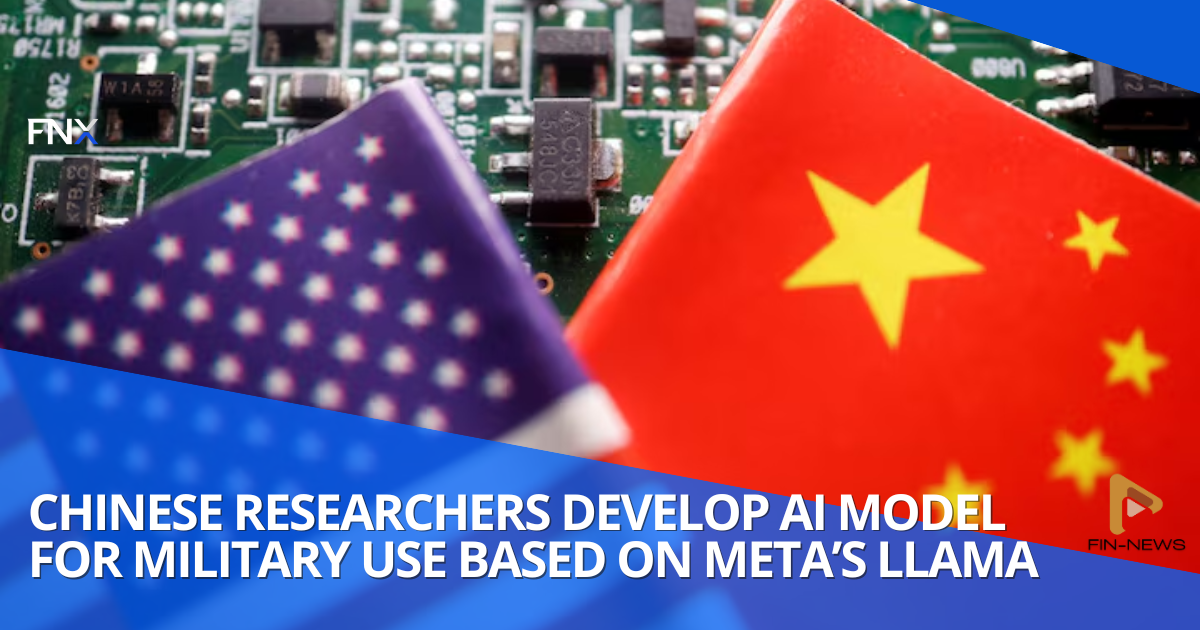
Chinese researchers have recently created a groundbreaking AI model tailored for military applications, using Meta’s Large Language Model, LLaMA, as a foundational framework. This new model, developed through collaborative efforts among leading Chinese AI and defense research institutes, aims to integrate advanced natural language processing (NLP) with strategic military systems to improve decision-making, operational efficiency, and tactical analysis on the battlefield.
Leveraging LLaMA: The Foundation of the New Military AI Model
Meta’s LLaMA, an open-source AI model, has garnered significant interest across sectors, thanks to its versatility in NLP and machine learning applications. The accessibility of LLaMA's codebase has allowed developers worldwide to adapt and modify the model to suit specific needs. However, using it for defense purposes, as seen in this recent Chinese advancement, represents a unique and strategic adaptation of open-source AI technology for national security.
Researchers working on the project have reportedly customized LLaMA’s architecture to fit the specific requirements of military operations. By adapting LLaMA’s framework, they can harness the model's strengths in processing vast datasets, translating complex commands, and generating predictive analytics crucial for dynamic military environments. This strategic move demonstrates China's commitment to enhancing its defense capabilities by adopting advanced, open-source technologies.
Applications and Capabilities of the New AI Model
The newly developed AI model is designed to serve multiple military functions, including:
- Enhanced Decision-Making: By analyzing large datasets, the AI can offer insights and recommendations to optimize tactical and strategic decisions.
- Intelligence and Surveillance Analysis: Leveraging its NLP capabilities, the AI can process intelligence reports, assess enemy communications, and identify key insights in real time.
- Predictive Modeling for Battle Tactics: The model can simulate various scenarios to predict potential outcomes and recommend responses, aiding commanders in planning and execution.
- Automated Logistics Management: Supporting logistical decisions by predicting resource needs, deployment schedules, and operational requirements.
According to experts, the AI model’s adaptability enables it to integrate seamlessly with existing military infrastructure, effectively bridging the gap between artificial intelligence and defense technology. The researchers anticipate that this innovation will enhance the precision and agility of China’s military response, providing a crucial technological edge.
Ethical Concerns and Security Implications
The use of open-source technology in military applications raises ethical and security concerns on a global scale. Critics argue that the repurposing of models like LLaMA for military applications might contravene the original goals of open-source collaboration and knowledge-sharing. Meta’s LLaMA, while open to the public, was intended for research, education, and civilian applications. The repurposing for defense, especially in a politically sensitive region, could spark debates on AI ethics and intellectual property.
In response to these developments, some international policy analysts advocate for stricter regulations surrounding the use of open-source AI in defense contexts. They argue that restricting such applications could prevent the misuse of civilian-intended technologies in potentially escalative military scenarios.
Additionally, the model’s existence highlights the security risks associated with open-source technology. As AI models become more accessible, there is a growing concern over the potential for dual-use applications where advanced algorithms could serve both civilian and military functions. Countries with competing military interests may perceive this development as a prompt to accelerate their own AI-based defense systems, potentially sparking an AI arms race.
China’s Strategic Focus on AI in Military Advancements
China has long prioritized artificial intelligence as a core component of its military modernization strategy. According to recent government reports, China aims to become a world leader in AI by the early 2030s. This ambition aligns with its broader goal of establishing technological independence and self-sufficiency in critical areas, including AI, quantum computing, and 5G technology.
The adaptation of LLaMA represents one aspect of China’s AI strategy, which includes developing indigenous technologies and leveraging international advancements. This combination of domestic innovation and adaptation of global AI research underscores the country’s approach to accelerating its military capabilities.
Zhang Wei, an AI specialist and professor at the Institute of Defense Research in Beijing, commented, “This new model demonstrates our commitment to creating high-performance AI systems that cater directly to our defense needs. We are entering a new era where AI is not just a tool but a central element in military infrastructure.”
Future Outlook: What This Means for AI and Military Technology
The evolution of AI in defense applications indicates that military technology is likely to become more autonomous, adaptive, and responsive. With models like China’s newly developed AI system, there is potential for militaries worldwide to adopt similar technologies, impacting how warfare is conducted.
Some defense analysts argue that these advancements may shift the balance of power in strategic conflict regions. As AI-driven military tools become more common, they will enable nations to make faster, data-driven decisions, potentially shortening response times during crises. This capacity could redefine modern warfare, shifting away from human-driven command structures toward machine-enhanced tactical and strategic systems.
However, the future of AI in defense remains fraught with uncertainties. As more nations invest in AI for military use, international bodies may need to establish guidelines and standards to govern such applications. Balancing technological progress with ethical considerations will be essential to ensuring AI advancements contribute to stability rather than escalating tensions.
Conclusion
China’s latest AI model, derived from Meta’s LLaMA, represents a pivotal step in the intersection of artificial intelligence and military technology. By repurposing open-source models for defense, China is not only bolstering its own military capabilities but also highlighting the broader implications of AI accessibility in defense applications. As the global community watches these developments, the need for transparent policies and international cooperation in AI usage becomes increasingly clear. The rise of military AI may shape the future of global security and redefine the landscape of modern warfare, presenting both opportunities and challenges for technological governance in the years to come.

Leave a comment
Your email address will not be published. Required fields are marked *